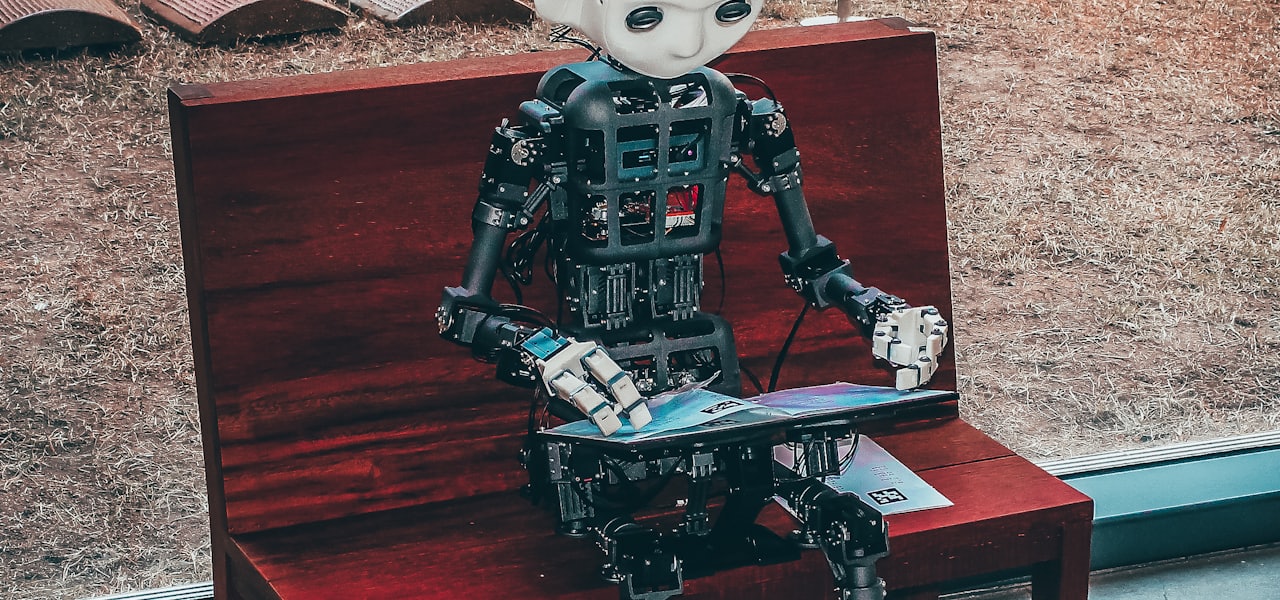
Nicholas M. W. Frosst is a Canadian computer scientist and musician. He co-founded Cohere, a Toronto-based artificial intelligence company. He is also the lead singer in the indie rock band Good Kid. == Early life and education == Frosst was born on January 5, 1993. Frosst earned a Bachelor of Science degree in computer science and cognitive science from the University of Toronto in 2015. He was a student of Geoffrey Hinton, who also hired Frosst at Google Brain. == Career == Frosst was among Geoffrey Hinton's earliest hires at Google Brain in Toronto, working as a machine learning researcher on deep learning and neural network architectures. He worked there from 2016 to 2020. Frosst co-founded Cohere with Aidan Gomez and Ivan Zhang in 2019. The company builds large language models and enterprise AI tools. Frosst has publicly explained Cohere's focus on industries like finance and health, where there are privacy and other regulatory considerations. Frosst has also spoken openly about his belief that artificial intelligence will not replace humans, but rather streamline and automate mundane tasks, and his belief that AGI is less "imminent" than many in the field claim. Frosst and the other Cohere co-founders were listed first on Maclean's AI Trailblazers Power List and The Logic's Innovation Leaders. == Music == After spending time in a prior band which played "weird" music featuring a glockenspiel, Frosst and fellow computer science students at the University of Toronto formed the indie rock band Good Kid in 2015. Frosst is the lead vocalist for the band. While on tour with the band, Frosst continues his work in the tech industry remotely. Frosst has described the band as way for him to relax and not constantly think about tech. His vocals have been compared to that of Kele Okereke. As of 2026, the band, which has performed at Lollapalooza, has 3.1 million monthly Spotify listeners. In 2024, the band was nominated for the Juno Awards Breakthrough Group of the Year. == Discography == === Good Kid === Can We Hang Out Sometime? (2026)
Catie Cuan
Catie Cuan is an artist, entrepeuneur, and innovator in the field of robotic art and human-robot interaction, where she specializes in choreorobotics, an emerging field at the intersection of choreographic dance and robotics. Catie Cuan is currently one of the academic researchers pioneering the field of choreorobotics and currently holds a post-doctoral fellowship at Stanford University. == Career == Catie Cuan earned a bachelor's degree from the University of California, Berkeley. She graduated with a Ph.D. from the Department of Mechanical Engineering at Stanford University, focusing in robotics. Her most cited publication is about how to improve robotic expressive systems using tools from dance theory, such as the Laban/Bartenieff Movement Analysis. In her most recent research projects, she explores a predictive model of imitation learning for robots moving around humans, a project that advances the field of social robotics. Cuan credits her work in robotics to the experience with her father when he had a stroke and was surrounded by many medical machines, which made her think about how people might feel empowered and hopeful rather than afraid. As a ballet dancer and choreographer, she has performed with the Metropolitan Opera Ballet and the Lyric Opera of Chicago. In 2020, she was the dancer and choreographer of the show Output, which was part of a collaboration with ThoughtWorks Arts and the Pratt Institute. In the production, she danced with an ABB IRB 6700 industrial robot. In 2022, she was named as an IF/THEN ambassador for the American Association for the Advancement of Science. The same year, she was appointed Futurist-in-Residence at the Smithsonian Arts and Industries Building, where she performed at the closing ceremonies of the FUTURES exhibit on July 6, 2022. Cuan has also contributed to product designs, working with IDEO and Dutch interior design firm moooi on their Piro project, which launched a dancing scent diffuser robot during Milan Design Week in June 2022. She is a TED speaker with talks about how to teach robots to dance, and what is coming up for dancing robots in the AI era.
Frame (networking)
A frame is a digital data transmission unit in computer networking and telecommunications. In packet switched systems, a frame is a simple container for a single network packet. In other telecommunications systems, a frame is a repeating structure supporting time-division multiplexing. A frame typically includes frame synchronization features consisting of a sequence of bits or symbols that indicate to the receiver the beginning and end of the payload data within the stream of symbols or bits it receives. If a receiver is connected to the system during frame transmission, it ignores the data until it detects a new frame synchronization sequence. == Packet switching == In the OSI model of computer networking, a frame is the protocol data unit at the data link layer. Frames are the result of the final layer of encapsulation before the data is transmitted over the physical layer. A frame is "the unit of transmission in a link layer protocol, and consists of a link layer header followed by a packet." Each frame is separated from the next by an interframe gap. A frame is a series of bits generally composed of frame synchronization bits, the packet payload, and a frame check sequence. Examples are Ethernet frames, Wi-Fi frames, 4G frames, Point-to-Point Protocol (PPP) frames, Fibre Channel frames, and V.42 modem frames. Often, frames of several different sizes are nested inside each other. For example, when using Point-to-Point Protocol (PPP) over asynchronous serial communication, the eight bits of each individual byte are framed by start and stop bits, the payload data bytes in a network packet are framed by the header and footer, and several packets can be framed with frame boundary octets. == Time-division multiplex == In telecommunications, specifically in time-division multiplex (TDM) and time-division multiple access (TDMA) variants, a frame is a cyclically repeated data block that consists of a fixed number of time slots, one for each logical TDM channel or TDMA transmitter. In this context, a frame is typically an entity at the physical layer. TDM application examples are SONET/SDH and the ISDN circuit-switched B-channel, while TDMA examples are Circuit Switched Data used in early cellular voice services. The frame is also an entity for time-division duplex, where the mobile terminal may transmit during some time slots and receive during others.
Knapsack problem
The knapsack problem is the following problem in combinatorial optimization: Given a set of items, each with a weight and a value, determine which items to include in the collection so that the total weight is less than or equal to a given limit and the total value is as large as possible. It derives its name from the problem faced by someone who is constrained by a fixed-size knapsack and must fill it with the most valuable items. The problem often arises in resource allocation where the decision-makers have to choose from a set of non-divisible projects or tasks under a fixed budget or time constraint, respectively. The knapsack problem has been studied for more than a century, with early works dating back to 1897. The subset sum problem is a special case of the decision and 0-1 problems where for each kind of item, the weight equals the value: w i = v i {\displaystyle w_{i}=v_{i}} . In the field of cryptography, the term knapsack problem is often used to refer specifically to the subset sum problem. The subset sum problem is one of Karp's 21 NP-complete problems. == Applications == Knapsack problems appear in real-world decision-making processes in a wide variety of fields, such as finding the least wasteful way to cut raw materials, selection of investments and portfolios, selection of assets for asset-backed securitization, and generating keys for the Merkle–Hellman and other knapsack cryptosystems. One early application of knapsack algorithms was in the construction and scoring of tests in which the test-takers have a choice as to which questions they answer. For small examples, it is a fairly simple process to provide the test-takers with such a choice. For example, if an exam contains 12 questions each worth 10 points, the test-taker need only answer 10 questions to achieve a maximum possible score of 100 points. However, on tests with a heterogeneous distribution of point values, it is more difficult to provide choices. Feuerman and Weiss proposed a system in which students are given a heterogeneous test with a total of 125 possible points. The students are asked to answer all of the questions to the best of their abilities. Of the possible subsets of problems whose total point values add up to 100, a knapsack algorithm would determine which subset gives each student the highest possible score. A 1999 study of the Stony Brook University Algorithm Repository showed that, out of 75 algorithmic problems related to the field of combinatorial algorithms and algorithm engineering, the knapsack problem was the 19th most popular and the third most needed after suffix trees and the bin packing problem. == Definition == The most common problem being solved is the 0-1 knapsack problem, which restricts the number x i {\displaystyle x_{i}} of copies of each kind of item to zero or one. Given a set of n {\displaystyle n} items numbered from 1 up to n {\displaystyle n} , each with a weight w i {\displaystyle w_{i}} and a value v i {\displaystyle v_{i}} , along with a maximum weight capacity W {\displaystyle W} , maximize ∑ i = 1 n v i x i {\displaystyle \sum _{i=1}^{n}v_{i}x_{i}} subject to ∑ i = 1 n w i x i ≤ W {\displaystyle \sum _{i=1}^{n}w_{i}x_{i}\leq W} and x i ∈ { 0 , 1 } {\displaystyle x_{i}\in \{0,1\}} . Here x i {\displaystyle x_{i}} represents the number of instances of item i {\displaystyle i} to include in the knapsack. Informally, the problem is to maximize the sum of the values of the items in the knapsack so that the sum of the weights is less than or equal to the knapsack's capacity. The bounded knapsack problem (BKP) removes the restriction that there is only one of each item, but restricts the number x i {\displaystyle x_{i}} of copies of each kind of item to a maximum non-negative integer value c {\displaystyle c} : maximize ∑ i = 1 n v i x i {\displaystyle \sum _{i=1}^{n}v_{i}x_{i}} subject to ∑ i = 1 n w i x i ≤ W {\displaystyle \sum _{i=1}^{n}w_{i}x_{i}\leq W} and x i ∈ { 0 , 1 , 2 , … , c } . {\displaystyle x_{i}\in \{0,1,2,\dots ,c\}.} The unbounded knapsack problem (UKP) places no upper bound on the number of copies of each kind of item and can be formulated as above except that the only restriction on x i {\displaystyle x_{i}} is that it is a non-negative integer. maximize ∑ i = 1 n v i x i {\displaystyle \sum _{i=1}^{n}v_{i}x_{i}} subject to ∑ i = 1 n w i x i ≤ W {\displaystyle \sum _{i=1}^{n}w_{i}x_{i}\leq W} and x i ∈ N . {\displaystyle x_{i}\in \mathbb {N} .} One example of the unbounded knapsack problem is given using the figure shown at the beginning of this article and the text "if any number of each book is available" in the caption of that figure. == Computational complexity == The knapsack problem is interesting from the perspective of computer science for many reasons: The decision problem form of the knapsack problem (Can a value of at least V be achieved without exceeding the weight W?) is NP-complete, thus there is no known algorithm that is both correct and fast (polynomial-time) in all cases. There is no known polynomial algorithm which can tell, given a solution, whether it is optimal (which would mean that there is no solution with a larger V). This problem is co-NP-complete. There is a pseudo-polynomial time algorithm using dynamic programming. There is a fully polynomial-time approximation scheme, which uses the pseudo-polynomial time algorithm as a subroutine, described below. Many cases that arise in practice, and "random instances" from some distributions, can nonetheless be solved exactly. There is a link between the "decision" and "optimization" problems in that if there exists a polynomial algorithm that solves the "decision" problem, then one can find the maximum value for the optimization problem in polynomial time by applying this algorithm iteratively while increasing the value of k. On the other hand, if an algorithm finds the optimal value of the optimization problem in polynomial time, then the decision problem can be solved in polynomial time by comparing the value of the solution output by this algorithm with the value of k. Thus, both versions of the problem are of similar difficulty. One theme in research literature is to identify what the "hard" instances of the knapsack problem look like, or viewed another way, to identify what properties of instances in practice might make them more amenable than their worst-case NP-complete behaviour suggests. The goal in finding these "hard" instances is for their use in public-key cryptography systems, such as the Merkle–Hellman knapsack cryptosystem. More generally, better understanding of the structure of the space of instances of an optimization problem helps to advance the study of the particular problem and can improve algorithm selection. Furthermore, notable is the fact that the hardness of the knapsack problem depends on the form of the input. If the weights and profits are given as integers, it is weakly NP-complete, while it is strongly NP-complete if the weights and profits are given as rational numbers. However, in the case of rational weights and profits it still admits a fully polynomial-time approximation scheme. === Unit-cost models === The NP-hardness of the Knapsack problem relates to computational models in which the size of integers matters (such as the Turing machine). In contrast, decision trees count each decision as a single step. Dobkin and Lipton show an 1 2 n 2 {\displaystyle {1 \over 2}n^{2}} lower bound on linear decision trees for the knapsack problem, that is, trees where decision nodes test the sign of affine functions. This was generalized to algebraic decision trees by Steele and Yao. If the elements in the problem are real numbers or rationals, the decision-tree lower bound extends to the real random-access machine model with an instruction set that includes addition, subtraction and multiplication of real numbers, as well as comparison and either division or remaindering ("floor"). This model covers more algorithms than the algebraic decision-tree model, as it encompasses algorithms that use indexing into tables. However, in this model all program steps are counted, not just decisions. An upper bound for a decision-tree model was given by Meyer auf der Heide who showed that for every n there exists an O(n4)-deep linear decision tree that solves the subset-sum problem with n items. Note that this does not imply any upper bound for an algorithm that should solve the problem for any given n. == Solving == Several algorithms are available to solve knapsack problems, based on the dynamic programming approach, the branch and bound approach or hybridizations of both approaches. === Dynamic programming in-advance algorithm === The unbounded knapsack problem (UKP) places no restriction on the number of copies of each kind of item. Besides, here we assume that x i > 0 {\displaystyle x_{i}>0} m [ w ′ ] = max ( ∑ i = 1 n v i x i ) {\displaystyle m[w']=\max \left(\sum _{i=1}^{n}v_{i}x_{i}\right)} subject to ∑
Key (cryptography)
A key in cryptography is a piece of information, usually a string of numbers or letters that are stored in a file, which, when processed through a cryptographic algorithm, can encode or decode cryptographic data. Based on the used method, the key can be different sizes and varieties, but in all cases, the strength of the encryption relies on the security of the key being maintained. A key's security strength is dependent on its algorithm, the size of the key, the generation of the key, and the process of key exchange. == Scope == The key is what is used to encrypt data from plaintext to ciphertext. There are different methods for utilizing keys and encryption. === Symmetric cryptography === Symmetric cryptography refers to the practice of the same key being used for both encryption and decryption. === Asymmetric cryptography === Asymmetric cryptography has separate keys for encrypting and decrypting. These keys are known as the public and private keys, respectively. == Purpose == Since the key protects the confidentiality and integrity of the system, it is important to be kept secret from unauthorized parties. With public key cryptography, only the private key must be kept secret, but with symmetric cryptography, it is important to maintain the confidentiality of the key. Kerckhoff's principle states that the entire security of the cryptographic system relies on the secrecy of the key. == Key sizes == Key size is the number of bits in the key defined by the algorithm. This size defines the upper bound of the cryptographic algorithm's security. The larger the key size, the longer it will take before the key is compromised by a brute force attack. Since perfect secrecy is not feasible for key algorithms, researches are now more focused on computational security. In the past, keys were required to be a minimum of 40 bits in length, however, as technology advanced, these keys were being broken quicker and quicker. As a response, restrictions on symmetric keys were enhanced to be greater in size. Currently, 2048 bit RSA is commonly used, which is sufficient for current systems. However, current RSA key sizes would all be cracked quickly with a powerful quantum computer. "The keys used in public key cryptography have some mathematical structure. For example, public keys used in the RSA system are the product of two prime numbers. Thus public key systems require longer key lengths than symmetric systems for an equivalent level of security. 3072 bits is the suggested key length for systems based on factoring and integer discrete logarithms which aim to have security equivalent to a 128 bit symmetric cipher." == Key generation == To prevent a key from being guessed, keys need to be generated randomly and contain sufficient entropy. The problem of how to safely generate random keys is difficult and has been addressed in many ways by various cryptographic systems. A key can directly be generated by using the output of a Random Bit Generator (RBG), a system that generates a sequence of unpredictable and unbiased bits. A RBG can be used to directly produce either a symmetric key or the random output for an asymmetric key pair generation. Alternatively, a key can also be indirectly created during a key-agreement transaction, from another key or from a password. Some operating systems include tools for "collecting" entropy from the timing of unpredictable operations such as disk drive head movements. For the production of small amounts of keying material, ordinary dice provide a good source of high-quality randomness. == Establishment scheme == The security of a key is dependent on how a key is exchanged between parties. Establishing a secured communication channel is necessary so that outsiders cannot obtain the key. A key establishment scheme (or key exchange) is used to transfer an encryption key among entities. Key agreement and key transport are the two types of a key exchange scheme that are used to be remotely exchanged between entities . In a key agreement scheme, a secret key, which is used between the sender and the receiver to encrypt and decrypt information, is set up to be sent indirectly. All parties exchange information (the shared secret) that permits each party to derive the secret key material. In a key transport scheme, encrypted keying material that is chosen by the sender is transported to the receiver. Either symmetric key or asymmetric key techniques can be used in both schemes. The Diffie–Hellman key exchange and Rivest-Shamir-Adleman (RSA) are the most two widely used key exchange algorithms. In 1976, Whitfield Diffie and Martin Hellman constructed the Diffie–Hellman algorithm, which was the first public key algorithm. The Diffie–Hellman key exchange protocol allows key exchange over an insecure channel by electronically generating a shared key between two parties. On the other hand, RSA is a form of the asymmetric key system which consists of three steps: key generation, encryption, and decryption. Key confirmation delivers an assurance between the key confirmation recipient and provider that the shared keying materials are correct and established. The National Institute of Standards and Technology recommends key confirmation to be integrated into a key establishment scheme to validate its implementations. == Management == Key management concerns the generation, establishment, storage, usage and replacement of cryptographic keys. A key management system (KMS) typically includes three steps of establishing, storing and using keys. The base of security for the generation, storage, distribution, use and destruction of keys depends on successful key management protocols. == Key vs password == A password is a memorized series of characters including letters, digits, and other special symbols that are used to verify identity. It is often produced by a human user or a password management software to protect personal and sensitive information or generate cryptographic keys. Passwords are often created to be memorized by users and may contain non-random information such as dictionary words. On the other hand, a key can help strengthen password protection by implementing a cryptographic algorithm which is difficult to guess or replace the password altogether. A key is generated based on random or pseudo-random data and can often be unreadable to humans. A password is less safe than a cryptographic key due to its low entropy, randomness, and human-readable properties. However, the password may be the only secret data that is accessible to the cryptographic algorithm for information security in some applications such as securing information in storage devices. Thus, a deterministic algorithm called a key derivation function (KDF) uses a password to generate the secure cryptographic keying material to compensate for the password's weakness. Various methods such as adding a salt or key stretching may be used in the generation.
DAvE (Infineon)
DAVE, or Digital Application Virtual Engineer, is a software development and code generation tool for microcontroller applications created in C/C++. == Versions == === Version 4 (beta) === The successor of the Eclipse-based development environment for C/C++ and/or graphical user interface (GUI) based development using application software (apps). It generates code for the latest XMC1xxx and XMC4xxx microcontrollers using ARM Cortex-M processors. DAVE software development kit (SDK) is a free integrated development environment to set up its own apps for DAVE. === Version 3 === Automatic code generation is based on the use of case-oriented, configurable, and tested software (SW) components, called DAVE Apps. They are comparable to executable and configurable application notes that can be downloaded from the web. The environment is based on Eclipse. Ordinary program development using C/C++ is also available. The targets for this development are XMC1xxx and XMC4xxx microcontrollers that use Cortex-M processors. === Previous versions === This version targets 32-bit microcontroller units (MCUs) (Infineon TriCore AUDO family), 16-bit MCUs (C166, XC166, XE166, and XC2000 family), and 8-bit MCUs (XC800 family) from Infineon. After the initial setup, the configuration wizard appears and gives an overview of the hardware peripherals, control units, and modules. The microcontroller application can be created by selecting the desired functions. At this step, module-specific functions must be selected for module initializing and control. Finally, the application source files will be generated by DAVE and embedded in a project in the selected development environment, where the code can still be modified or added to an extant project. == DAVE-related software == Infineon also developed additional software that can be used in conjunction with DAVE for specific microcontroller families or additional hardware: DAVE Bench for XC800 is a platform providing free development tools for Infineon's 8-bit microcontroller family, based on the Open Source Eclipse architecture. DAVE Drive is a GUI-based software tool that allows application developers to create embedded software for the control of brushless synchronous three-phase motors. == Alternative software == The Infineon MCUs are directly supported by several commercial products, depending on the selected MCU target. An embedded programming library for MATLAB exists. As a free alternative to DAVE, the developer can use the Keil Microcontroller Development Kit (MDK) Version 5. Code for the XMX1000 series up to 128 kB can be developed this way without purchasing a license from Keil.
ServerNet
ServerNet is a switched fabric communications link primarily used in proprietary computers made by Tandem Computers, Compaq, and HP. Its features include good scalability, clean fault containment, error detection and failover. The ServerNet architecture specification defines a connection between nodes, either processor or high performance I/O nodes such as storage devices. == History == Tandem Computers developed the original ServerNet architecture and protocols for use in its own proprietary computer systems starting in 1992, and released the first ServerNet systems in 1995. Early attempts to license the technology and interface chips to other companies failed, due in part to a disconnect between the culture of selling complete hardware / software / middleware computer systems and that needed for selling and supporting chips and licensing technology. A follow-on development effort ported the Virtual Interface Architecture to ServerNet with PCI interface boards connecting personal computers. Infiniband directly inherited many ServerNet features. As of 2017, systems still ship based on the ServerNet architecture.